

Majales 3
Majáles 2013 je tu. Na programe je stavanie Mája, tombola, vystúpenie Stonožky, slovenské koláče, večera, občerstvenie a samozrejme zábava.
Vstupné len $10. Študenti a penzisti len $5. Deti zdarma.
Majáles 2013 je tu. Na programe je stavanie Mája, tombola, vystúpenie Stonožky, slovenské koláče, večera, občerstvenie a samozrejme zábava.
Vstupné len $10. Študenti a penzisti len $5. Deti zdarma.
Good Shepherd Sunday and “World Day of Prayer for Vocations.”
Acts 13:14,43-52; Psalms 100:1-2,3,5; Revelation 7:9,14-17; John 10:27-30
The sheep that belong to Me listen to My voice; I know them and they follow Me
(John 10:27).
Today’s first reading describes how Paul and Barnabas opted to listen to the voice of Jesus the Good Shepherd and follow him, and how, like their Master, they were rebuffed and rejected when they tried to share the good news of salvation. It also suggests that the sympathy of the early Christians for the Gentiles caused a rupture with Judaism. The second tells us where Jesus, shepherd and sacrificial lamb, leads his flock. We shall find there all the answers to all the puzzles of life.
The Gospel reading from John encourages us to listen to the voice of the Shepherd. A shepherd is one who leads his flock safely to pasture and fresh water. Jesus is the only true shepherd. His way, and what he teaches, is to lay down his life out of love. This is the theme we are called to reflect on every Sunday during Paschal time. His sheep are those who listen to his voice and have the courage to follow in his footsteps. This is the message of the gospel.
The Fourth Sunday of Easter marks the 50th World Day of Prayer for Vocations instituted by Pope Paul VI in 1964. We are especially encouraged to pray for vocations to religious, missionary and priestly vocation.
Readings: Acts 5:27-32, 40b-41; Revelation 5:11-14; John 21:1-19 or 21:1-14 (48)
Jesus said to Simon Peter, ‘Do you love me . . . ?’ Simon Peter answered him, ‘Yes, Lord, you know that I love you.’ Jesus said to him, ‘Feed my lambs.’
Why did Jesus ask Peter the same question three times? I think he wanted Peter to understand — and he wanted you and me to understand — that it isn’t enough just to say, “I love you.” We must show our love for Jesus by showing our love for one another and caring for one another. Do you love Jesus?
Jesus was not trying to make Saint Peter squirm when after his Resurrection he asked his apostle three times, “Do you love me?” It was less an undoing of Peter’s denial and more a response to Peter’s own need to say the words and to hear himself say what he believed.
In the musical Fiddler on the Roof Tevye asks his wife, “Golda, do you love me?” She answers with a litany of all the chores she does for him and the family, but Tevye keeps asking until she finally admits, “I suppose I do,” and with both of these replies Tevye is satisfied. Words and deeds of love—both are essential. Examine your own words and deeds—do they measure up? Do you really love me?
Dear Jesus, help us to show our love for you by loving and caring for one another.
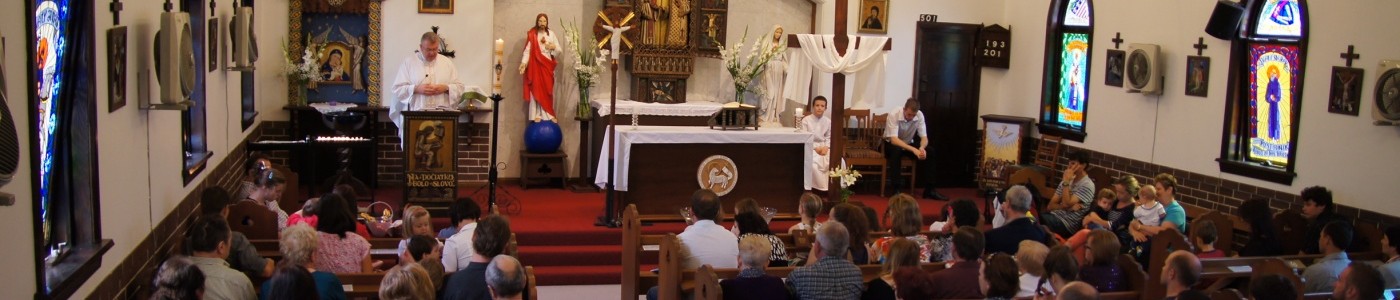
Readings: Acts 5:12-16; Revelation 1:9-11a, 12-13, 17-19; John 20:19-31 (45)
Do not be afraid. I am the first and the last, the one who lives.
If you had to describe the Church to a non-believer, how would you do it? That’s not an easy question to answer. Sometimes, what is most familiar to us is hardest to define. Today, however, the Sunday dedicated to honoring God’s mercy, we are presented with a beautiful portrait that brings out the Church’s most essential characteristic: the Church is the extension throughout all time and space of Christ’s very own presence.
The Book of Acts shows how the infant Church did exactly what Christ did; it paints a portrait of the Church that is an exact replica of the Gospels’ portrait of Christ. All the Christians would gather under the marble columns of Solomon’s portico, inside the Temple’s courtyard in Jerusalem. That same portico, the Gospels tell us, was Jesus’ favorite preaching spot. Huge crowds brought the sick and possessed to the Apostles, who cured them by miracles – exactly what had happened to Christ during his public ministry. The Book of Acts goes on to describe how great numbers were added to the circle of believers – here we see the beginning of the expansion of the Church, the extension of this presence and action of Christ that will eventually reach the entire world.
The same point is made more symbolically by the Second Reading. There St John tells us that he saw seven golden lamp stands, and Christ, the Son of Man, was walking among them. In the Bible, the number seven means fullness, completeness. The lamp stands represent the numerous Christian communities throughout the world that together make up Christ’s one Church. The Church shines brightly in the world, like a lamp, with the light of Christ’s truth and precious gold of his mercy. And where does Christ fit into this picture? He is “in the midst of the lamp stands“. Christ dwells in his Church. Wherever the Church reaches, it brings the presence of Christ.
The Gospel passage removes any doubts that may be lingering after the first two Readings: Jesus tells his Apostles: “As the Father has sent me, so I send you.” In other words, you – the pillars of my Church – are to be my presence in the world. This is the Church: the extension of Christ’s presence throughout the earth.
Christ was God’s redemptive, boundless mercy made visible; the Church has now taken up that baton, and will be God’s mercy continually made visible unto the ends of the earth till the end of time.
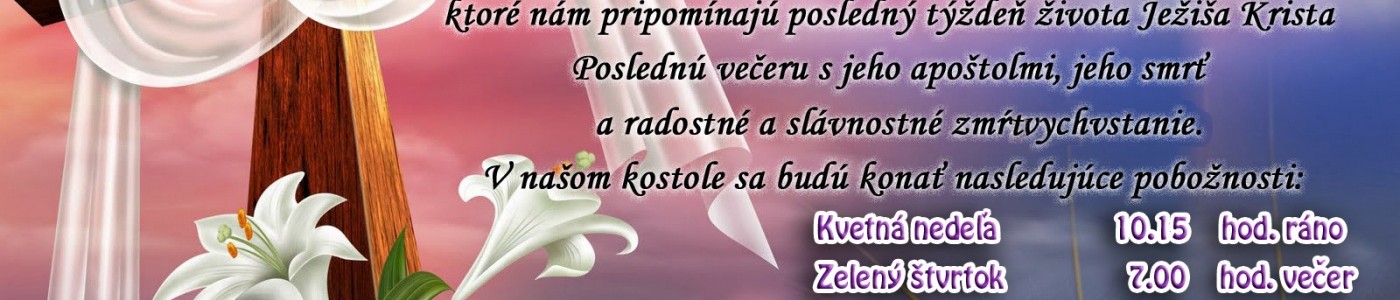
Readings: Day: Acts 10:34a, 37-43; Colossians 3:1-4 or 1 Corinthians 5:6b-8; John 20:1-9 (42) or Luke 24:1-12 (41)
At daybreak on the first day of the week the women . . . went to the tomb. They found the stone rolled away.
Although Christ had told his disciples he would be raised on the third day after his death, his empty tomb on the morning of that day came as a shock. At first no one knew what to make of it. Had the body been stolen? They had to run to the tomb to see for themselves. Angelic beings had to tell them what had happened. Notice how none of the disciples believed immediately. You’d think they would have reacted with instant joy to the news of this confirmation of Jesus’ promise they had been waiting for so expectantly, but they were surprised and astonished. As believers today, we know that the Good News of Christ’s gospel is not too good to be true.
Readings: At the Easter Vigil: Genesis 1:1-2:2 or 1:1, 26-31a; Genesis 22:1-18 or 22:1-2, 9a, 10-13, 15-18; Exodus 14:15-15:1; Isaiah 54:5-14; Isaiah 55:1-11; Baruch 3:9-15, 32-4:4; Ezekiel 36:16-17a, 18-28; Romans 6:3-11; Luke 24:1-12 (41)
But Peter got up and ran to the tomb . . . then he went home amazed at what had happened.
When someone dies, particularly someone beloved, it’s often difficult to find words of comfort. Invariably, someone will say what a blessing the deceased was, a godsend to all who knew him or her. It’s true—most people’s lives are a blessing to us. Despite all its fierce and feeble aspects, life is good. Just ask God: God looked at creation—even the “great sea monsters” and “creeping things”—and “saw how good it was.” Today is Holy Saturday, a time of loss and sorrow, yet it is also a time of great appreciation for the good that remains, that cannot be vanquished, that will live forever.
Readings: Isaiah 52:13-53:12; Hebrews 4:14-16; 5:7-9; John 18:1-19:42 (40)
Let us confidently approach the throne of grace to receive mercy and to find grace for timely help In the face of suffering, death, and mystery, words often fail us. Yet on this day there are only a few words to remember, to pray, and to make our own.
In his reflection on Good Friday the Catholic theologian Father Karl Rahner, S.J. invites us to speak Jesus’ own words: “They are quite simple; everyone can understand and say them with him. This is the abyss of existence into which we fall. And we believe that there dwell love and life themselves. We say, Father, into your hands I commend myself, my spirit, my life and my death. We have done all that we could; the other, the ineffable that is salvation, will come, too”
(Grace in Freedom)
Readings: Evening Mass of the Lord’s Supper: Exodus 12:1-8, 11-14; 1 Corinthians 11:23-26; John 13:1-15 (39)
I have given you a model to follow, so that as I have done for you, you should also do.
Holy Thursday is surely one of the most beautiful and eventful days of the liturgical year. Early in the day the bishop will bless the holy oils each parish will use during the coming year. The evening Mass commemorates four central events in Jesus’ life: his washing of the disciples’ feet, the institution of the Sacrament of the Holy Eucharist at the Last Supper, his agony in the garden, and his betrayal by Judas. The Holy Thursday liturgy expresses the most important tenets of the faith in microcosm. You can’t help but be inspired. Make an effort to attend Mass today.
Readings: Isaiah 50:4-7; Philippians 2:6-11; Luke 22:14-23:56
Today all Catholics throughout the world turn their hearts and minds once again to the suffering and death of Jesus Christ. That suffering won for all humankind the definitive victory over sin and hopelessness – a victory we declare and celebrate with these palm branches, the ancient world’s symbol of triumph.
God is all-powerful. He could have chosen to save us from sin in many other ways. Why did he choose to do it by suffering? What is the meaning of the Passion? The Passion tells us with perfect clarity the message we most need to hear. The Passion of Our Lord says to us: God is faithful; you can trust him. Trusting God is the most important thing for us, but it’s also the hardest, because our trust has been violated.
The Passion is God saying to us: “No matter what you do, I will keep on loving you. I will never let you down.” If we reject him, scourge him, crown him with thorns, betray him, even if we crucify him, he continues to love us: “Father, forgive them, they know not what they do.” God’s love and faithfulness doesn’t depend on us being perfect, and it doesn’t depend on his whims. He will never take it back. We can trust him – completely.
That’s the message of the Passion. And it’s the message that each of us, wounded and sinful as we are, most needs to hear.
Readings: Isaiah 43:16-21; Philippians 3:8-14; John 8:1-11
One of God’s main policies in governing the universe is that he always gives us another chance. This is what the prophet Isaiah tells us. Through him, God explains: “Remember not the events of the past… see, I am doing something new!” God is inviting his people to look to the future with hope. God reminds them that he has done wonders for his people in the past, and promises to do so again. It’s God’s policy to give his people another chance, to bring them back from exile even though they don’t really deserve it.
Jesus follows the same policy with the adulterous woman. Notice that he doesn’t ignore or excuse her sin – he acknowledges it and actually tells her to “go and sin no more.” But at the same time, he doesn’t condemn her. He gives her another chance.
Giving us another chance is one of God’s main policies. It’s called mercy. It’s called forgiveness. It’s called real love in a sinful, fallen world. The Pharisees wanted to destroy the sinful woman. Jesus wanted to give her another chance.
This was Jesus’ mission. He came to earth to overcome sin and death with mercy and resurrection; to lead each one of us out of exile and into eternal life, just as God had led Israel out of Babylon and back to Jerusalem.
We are Christians. We are Christ’s followers. We are Christ’s representatives in the world. If his mission was to give people another chance, then our mission has to be the same.


